Guided drain check

Check your drain symptoms.
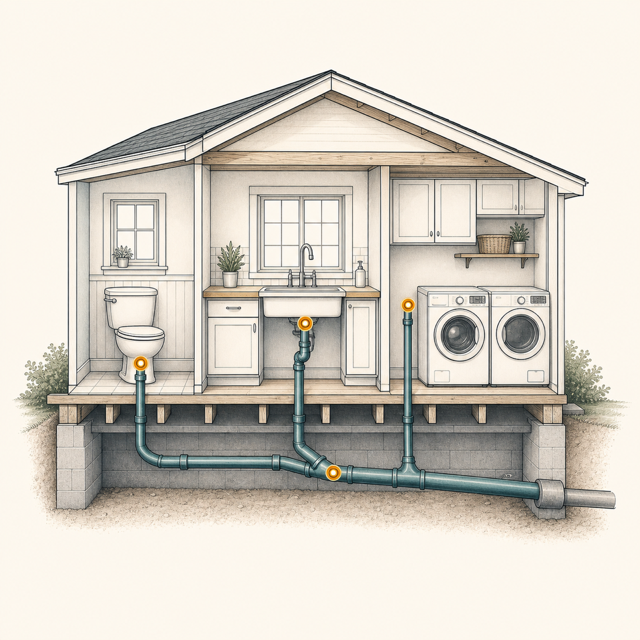
Cutaway illustration of a toilet, sink, and laundry drain joining one shared drain line

Observation first

Start with immediate safety, then map the fixtures and pattern you observed.

Safety · stage 1 of 4

Check what should not wait.

Answer from what you already observed. Do not run water, flush, enter standing water, or recreate a backup.

  • Keep people and pets away from sewage or unknown standing water.
  • Do not touch electrical equipment in or near a wet area.
  • Do not add, mix, plunge, or snake where a drain product may remain.
Is sewage or wastewater visible inside the home?
Is sewage or untreated wastewater visible outside the home?

Do not approach or touch it to check.

Is there standing water in the affected area?
Is water dripping through, touching, or close to a light, outlet, appliance, panel, pump, or wiring?
Are there sparks, arcing, or a burning electrical smell?
Has anyone used a drain product or cleaner in an affected drain?

Choose Not sure if another occupant may have used one.

Could the odor or situation involve fuel gas?
Is there an unexplained hissing sound nearby?
Is an open septic tank, sewer access, or manhole involved?

Keep away from the opening. Never enter it.

Has anyone entered a sewer, manhole, septic tank, or similar enclosed opening?
What kind of odor is present?

Choose the closest match without staying to investigate.

Which symptoms does anyone have right now?

Select every observed symptom. Do not stay in the area to check again.

Safety, stage 1 of 4.

Before you begin

  • Stop using fixtures if wastewater is backing up.
  • Do not add or mix drain chemicals.
  • Keep away from standing water near electrical equipment.
  • For an active overflow, control the immediate water source only if safe.

DrainPath provides general information. It cannot inspect your system or confirm a cause.