See what changed the route
The result connects each recommendation to the fixtures and symptoms you reported.
Safety-first home drain symptom checker
Choose the affected fixtures and symptoms you observed. DrainPath separates safety stops from likely local or shared drain problems, then shows a conservative next step.
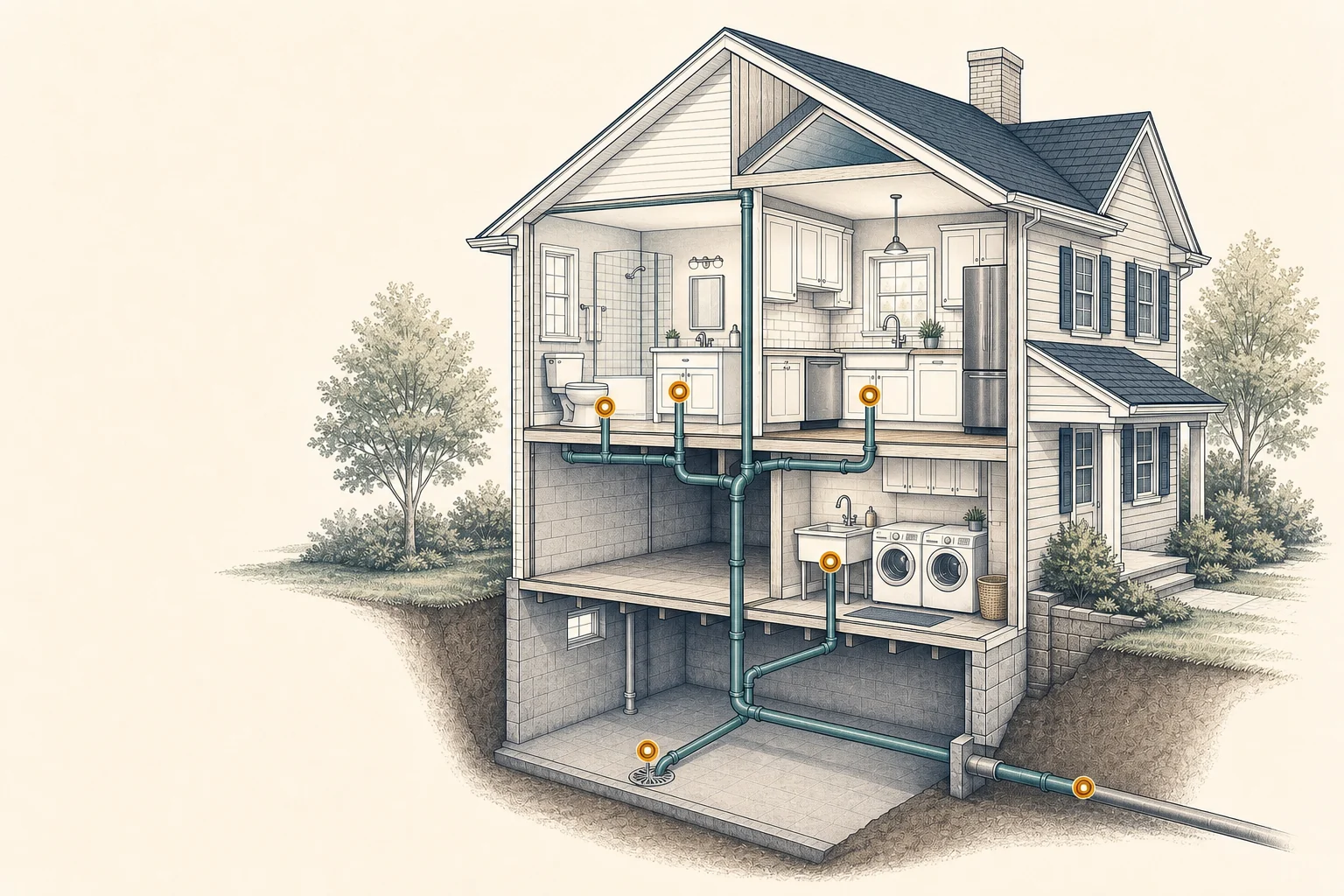
One answer. Three separate decisions.
Sewage backing up, chemicals already in the drain, or water near electricity require a different response—not a more aggressive tool.
Read by symptom
What that pattern can and cannot tell you before choosing an action.
Read the guide →SoundWhy connected symptoms deserve a wider view than a single bowl.
Read the guide →SafetyContact risk comes before attempts to plunge, snake, or disassemble.
Read the safety note →How it works
Start with the fixture and what changed. DrainPath checks safety first, then shows what the answers suggest and what remains uncertain.
Choose the fixture, symptom, and whether another drain is affected.
Prior chemical use, sewage, flooding, and electrical hazards override ordinary paths.
See life safety, drain-use control, and service timing without collapsing them into one vague urgency label.
What every result shows
The result connects each recommendation to the fixtures and symptoms you reported.
“Possible,” “likely,” and “not enough information” stay visible instead of becoming false certainty.
Every stop condition and prohibited action includes reviewable evidence.
Begin with what changed